an example of my FICTION
Served On A Plato
One thing a booklover treasures is the persistence of a physical bookshop in the digital age. Like moths attracted to a lightbulb, we flock around these electrified spaces hoping for social nourishment. Reading nights and author talks tantalise the aspiring writer with glimpses of artists making a real living. Devoted readers attend these events to celebrate that otherwise invisible individual behind the intimate experience of reading.
If you ask me where I stand in terms of the parties involved at bookshops (the writer, the reader, the aspiring writer, and the bookseller), I will say that I am a mixture of all four. As I browse the shelves, I wait for hope and inspiration. Titles, names, cover designs, blurbs …these details buzz through my honeycombed mind, igniting the neural connections inside my psyche, dusting clean my interior surfaces and leaving a film of refreshing dew. I anticipate the thrilling moment when I find a suitable printed companion to occupy my next few weeks.
Though it is becoming rarer these days, sometimes I go into a second-hand shop and find a book that deserves, in my opinion, to be read by every person on this planet. And all for the cost of a cup of coffee. Of course, coffee and books are an ideal mix, and often I find coffee stains between the pages of these preloved findings, like a residual lipstick kiss from a kindred spirit.
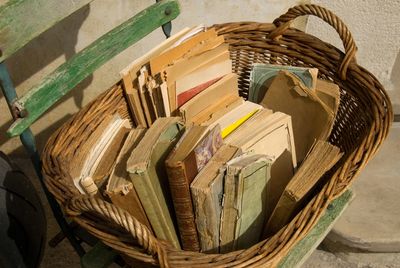
Last week, my world began to spin on a slightly different axis when I picked up an age-stained classic at the bottom of a pile of freebies on the side of the road. It was Plato’s The Republic. This book has been haunting my Books to Read list for years, and now here it is, albeit in a rather sorry state. I took it home and let it bake in the sterilising sunlight for an afternoon before thrusting it into an accessible parking space in my ramshackle private library.
It might come as a surprise that I majored in English Literature at college. The reason I bring this up is because though I love words, I have a certain aversion to analysing to death great works of literature. Perhaps this is due to my working-class background. In my family as I was growing up, the only reading materials were the old newspapers that the local charity wrapped their donated shoes in, distributed regularly to needy households, that is, people like my parent and us kids. As I grew into a teenager and went through the pre-adulthood education system, I became increasingly astonished at the imaginative wealth that my prescribed reading curriculum exposed me to. Thus, every book mattered.
While there were circumstantial doors barring me from privilege at birth, books magically bridged the gap between the impoverished bedroom I shared with my siblings and the furnished study of a wise writer. Behind the ink on paper was a friend teaching me how to find a master key to all of life’s opportunities.
And it was the same with Plato. The Republic was the most intense intellectual and moral contest I have ever witnessed. In it, Plato pretends to be Socrates and teases out the complexities and ambiguities in the most important matters of life…especially that of how to be a good human being. It is unnervingly incisive in perceptiveness. Here was a two-thousand-year-old mind bravely demonstrating the power of plain words to distillate chaos into universal insights. Why aren’t people today debating like this about right and wrong, and all the grey areas in between?
As I woke up with Plato’s arguments in the morning and went to bed with his arguments at night, I wondered if I could start up a Plato academy where pupils learn to be independent and ethical thinkers. My goal wasn’t to force an ancient philosophic movement into rebirthing itself in the contemporary age. I simply wanted curious and hugely neglected people to sit down and have a life-changing conversation.
As I visited my favourite neighbourhood street libraries, eager to rehome an abandoned tome in my intellectual vault, I became increasingly excited about this idea.
I could set up an online component. There would be different interest groups engaged in explorations of specific issues, polls to find new behavioural trends and promote real-time inclusivity, debating competitions on controversial topics, and a network of altruistic change-makers to collaborate on social enterprises.
I hesitantly approached the house where I found Plato’s book. The freebie pile was still there, but there was an anxious woman rummaging through it. She was almost throwing things aside as she searched for something. Her high-pitched voice gave out exclamations of distress.
Though I am usually withdrawn and aloof with strangers, after a minute of waiting for her to notice me, I decided to tentatively reach out and touch her elbow.
She swung towards me and gave me a harried look. Her hair was wild, and her face was sweaty. Her hands froze in mid-motion.
“Are you okay?” I asked.
She sighed heavily and indicated towards the pile.
“I am looking for a book I threw out earlier. I need it back.” Her voice was impatient.
“Which book? I took one from here.”
“A book by Plato.”
And the rest is history. She explained that she had initially decided to purge herself of outdated books. But after five days of soul-searching, she realised the entirety of human knowledge was built on the successive, foundational layers of previous worldviews, and that to disregard the processes of gradual accumulation and evolution involved would be disrespectful and dangerous. It’s like only taking the fruit from the fruit tree and ignoring the numerous other benefits that a fruit tree can offer. The year-round shade, the absorption of carbon, the nesting place for birds and refuge for insects. We soon became lovers. And co-founders of a not-for-profit educational organisation called Served on a Plato.